
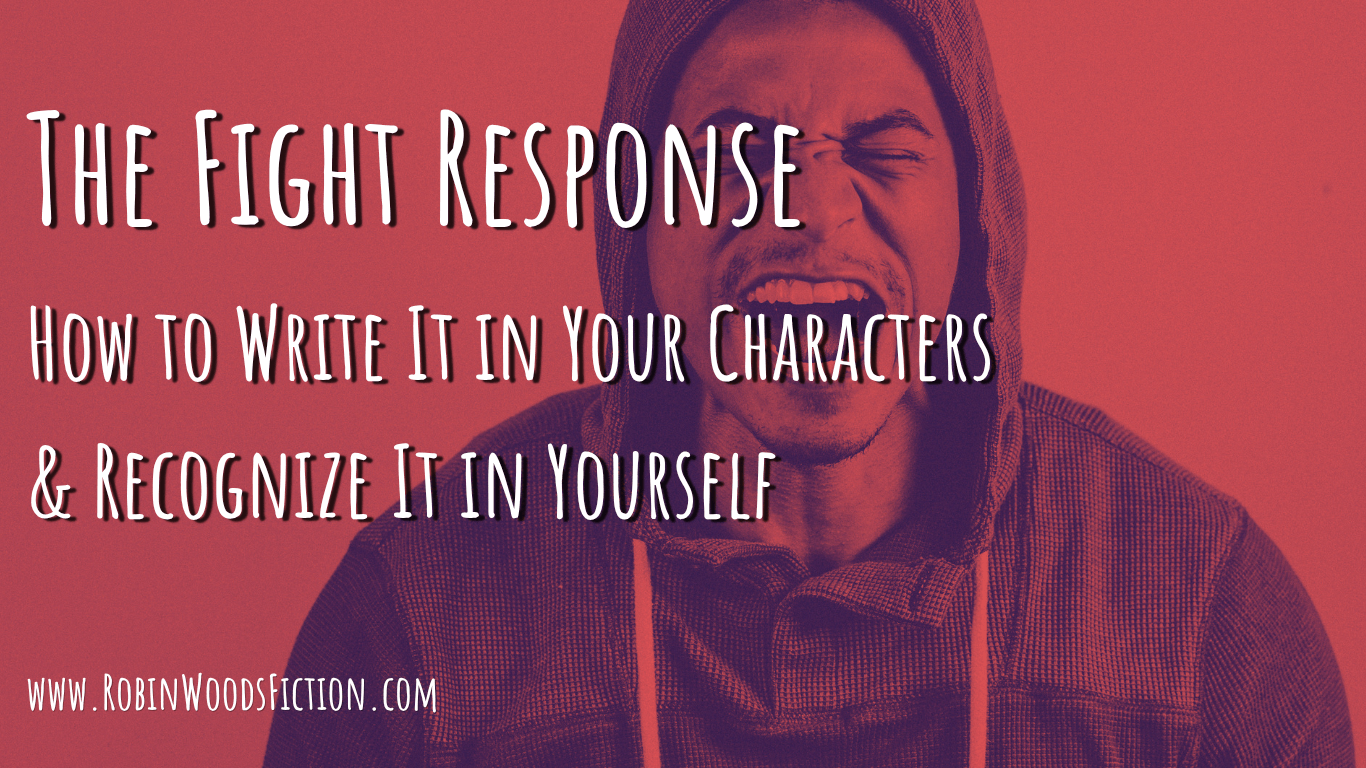
Part 1 of a four-post series on Fight, Flight, Freeze, and Fawn
Writers spend a lot of time asking questions about characters.
- What does she want?
- What’s he afraid of?
- Why did she snap at him when he was trying to help?
- Why is this character suddenly controlling everything in sight?
Those are character questions.
They’re also human questions.
For years, I’ve helped writers look closely at motivation, fear, conflict, desire, and change. The more honestly we understand those things in ourselves, the more truthfully we can put them on the page.
That’s part of what led me from creative writing into reflective journaling.
So, for the next four posts, I’m looking at fight, flight, freeze, and fawn in two ways:
- How these protective responses can show up in fictional characters.
- How recognizing them may help us understand ourselves with a little more curiosity and a little less shame.
We’ll begin with fight.
What Is the Fight Response?
In simple terms: The fight response is a defensive reaction in which the body prepares to confront a perceived threat. It may show up as anger, defensiveness, control, arguing, muscle tension, or an urgent need to act.
When the brain detects danger or intense stress, the sympathetic nervous system can mobilize the body for action. Heart rate and breathing may increase, muscles may tense, and attention can narrow toward the perceived threat.
That doesn’t mean everyone in a fight response starts swinging.
In ordinary life, fight may look like:
- Anger
- Irritability
- Defensiveness
- Arguing
- Controlling behavior
- A sharper or louder voice
- An urge to confront
- Difficulty backing away from conflict
- Feeling that something must be handled right now
Anger itself isn’t automatically unhealthy. The American Psychological Association describes anger as a natural, adaptive response to threats that can motivate us to defend ourselves. Problems arise when anger becomes uncontrolled, misplaced, or harmful.
The useful question becomes: What is the anger trying to accomplish, and what do we do with it?
I explore protective responses more deeply in Prompt Me: Safety Within, a six-month guided nervous system journal for body awareness, emotional resilience, and self-trust.
Writing a Character in Fight
Fight can make a character wonderfully interesting because it gives you something visible on the surface and something potentially very different underneath.
Your character may look furious. But fury may not be the whole story.
Perhaps they feel…
- Threatened.
- Cornered.
- Humiliated.
- Powerless.
- Afraid someone they love will get hurt.
- Certain they’re about to be rejected.
- Or convinced that if they don’t take control immediately, everything will fall apart.
That gives you layers.
A Character in Fight Might:
- Clench their jaw or fists
- Square their shoulders
- Lean toward someone instead of away
- Interrupt
- Pace
- Speak more loudly or quickly
- Become unusually decisive
- Try to control the situation
- Interpret neutral comments as criticism
- Defend themselves before anyone has accused them
- Focus intensely on what’s unfair
- Have difficulty considering another point of view
- Feel heat in their face, chest, or neck
- Become fiercely protective of another person
- Refuse to leave an argument unfinished
You don’t need to use all of these.
In fact, please don’t.
Your character will begin looking as if they swallowed a psychology textbook.
Choose two or three details that fit the person and the scene.
Things a Character in Fight Might Say
Dialogue is a lovely place to reveal a defensive response without explaining it.
A character in fight might say:
- “I said I’ve got it.”
- “Don’t tell me what to do.”
- “Why are you coming at me?”
- “That’s not what happened.”
- “I’m not talking about this again.”
- “Just stop.”
- “No. We’re dealing with this now.”
- “You don’t get to talk to me like that.”
- “I’m fine.”
- “Move.”
Notice that some of these can represent a healthy boundary.
Others may be defensive, aggressive, or disproportionate.
Context matters.
That’s what makes a character believable.
If Your Character Is Evil…
They can use the same protective energy in a much darker way.
An evil character in fight might:
- Intimidate anyone who challenges them
- Interpret disagreement as disloyalty
- Punish other people for making them feel powerless
- Control everyone around them so they never feel vulnerable
- Use anger to silence questions
- Escalate minor conflicts to maintain dominance
- Frame cruelty as “strength”
- Become dangerous when embarrassed
They might say:
- “You should’ve known better than to challenge me.”
- “Nobody says no to me.”
- “You made me do this.”
- “If I can’t trust you, I’ll make sure no one can.”
A useful villain-writing note: A protective response can explain behavior without excusing it.
That’s true in fiction.
It’s also true in real life.
What Might Be Happening Underneath Fight?
This is where things get interesting.
Anger can be the primary emotion. It doesn’t always have a hidden feeling underneath it. But sometimes fight is protecting something else.
That might include:
- Fear
- Hurt
- Shame
- Grief
- Helplessness
- Rejection
- Betrayal
- A threatened boundary
- A need for control during uncertainty
Or it might be:
- A character who looks furious because someone is late may actually be terrified because the last person who disappeared never came home.
- A person who becomes defensive during feedback may have learned that mistakes lead to humiliation.
- A parent who snaps, “Where were you?” may have spent twenty minutes imagining a car accident.
- Same anger.
Very different story underneath it.
This is why asking why matters so much in character development.
And it can be useful in our own lives too.
When You Recognize Fight in Yourself
We’re usually generous with fictional characters.
- We know what happened to them three chapters ago.
- We understand why they’re afraid.
- We recognize the wound behind the behavior.
Then we get angry ourselves and think: What is wrong with me?
A more useful question may be: What is this response trying to protect?
That doesn’t mean: “My anger is justified, therefore I may behave however I want.”
Understanding isn’t the same as permission. You can understand why a response appeared and still take responsibility for what you do next. That distinction matters.
What Usually Doesn’t Help Someone in Fight
When someone is highly activated, certain responses may add fuel rather than reduce it.
Things that often don’t help include:
- “Calm down.”
- “You’re being ridiculous.”
- “You’re overreacting.”
- “What is wrong with you?”
- Matching their volume and intensity
- Mocking them
- Demanding an immediate answer
- Cornering them physically or emotionally
- Continuing to argue every point while the conversation is escalating
If someone is behaving dangerously, your priority is safety. Trauma-informed communication does not mean tolerating abuse, threats, or putting yourself at risk.
What May Help Someone in Fight
Trauma-informed approaches emphasize principles such as safety, trust, collaboration, empowerment, and choice. In an ordinary conflict, that may sound like:
- “We don’t have to solve this right this second.”
- “Would you like some space?”
- “I want to understand, but I don’t think either of us is getting anywhere right now.”
- “Do you want to talk about this now or come back to it later?”
- “What do you need before we continue?”
- “I hear that this matters to you.”
Again, this isn’t a magic script. People are complicated.
Sometimes the kindest thing you can do is give someone room.
Other times you need to set a boundary.
Unfortunately, sometimes you need to leave.
What May Help When You’re in Fight
The goal isn’t to make anger disappear. The goal is to create enough space between the feeling and the action that you have more than one option.
You might try:
- Notice the body first.
Is your jaw tight? Are your hands clenched? Does your face feel hot? - Delay the response when possible.
You don’t have to answer the text, email, or question immediately. - Name what matters.
Is this about fairness? Respect? Fear? A boundary? Feeling unheard? - Move some of the energy.
A walk, stretching, or other safe movement may help when your body feels primed for action. - Ask what’s actually required right now.
Not what your anger wants to solve forever. What needs to happen in the next ten minutes? - Choose the boundary instead of the explosion.
“I’m not able to continue this conversation while we’re yelling” communicates something very different from slamming a door hard enough to scare the cat into another zip code.
Stress affects multiple systems of the body, including the musculoskeletal, cardiovascular, respiratory, gastrointestinal, and nervous systems. That’s one reason activation can feel so intensely physical. (Trauma-Informed Responses)
A Short Writing Exercise
You can use this for yourself or a character. Complete whichever lines feel useful:
My anger may be trying to protect…
What feels threatened is…
Beneath the anger, there may also be…
The boundary I wish had been respected is…
One thing I can control right now is…
For a character, keep going:
What would this person do if they felt safe enough to tell the truth instead of fighting?
That question can open an entire scene.
Fight Isn’t the Enemy
The fight response exists for a reason.
- Sometimes we need energy.
- Maybe we need anger.
- Other times we need to defend ourselves or someone else.
The goal isn’t to become permanently calm and agreeable.
It’s flexibility and increased capacity.
- Can I recognize what’s happening?
- Do I understand what matters?
- Can I respond in a way that protects what needs protecting without causing unnecessary harm?
That’s useful work for a character. It’s useful work for the person writing them too.
Want to Explore This More Deeply?
This article is Part 1 of a four-post series on protective responses in our characters and ourselves:
- The Fight Response: How to Write It in Your Characters and Recognize It in Yourself
- The Flight Response: When Your Character Runs Without Going Anywhere
- The Freeze Response: Why Your Character Can’t “Just Do Something”
- The Fawn Response: When Keeping Everyone Happy Feels Safer Than Saying No
[LINKS WILL GO LIVE AS POSTS ARE PUBLISHED]
If you’d like to explore these patterns through guided writing, Prompt Me: Safety Within is a six-month guided nervous system journal for body awareness, emotional resilience, and self-trust.
It explores fight, flight, freeze, and fawn responses along with body awareness, protective patterns, wants and needs, identity, boundaries, grounding, and present-moment support.
Prompt Me: Trust Within continues the journey into relationships, conflict and repair, reciprocity, self-compassion, beliefs, joy, meaning, and growth.
Or explore the full collection: Prompt Me Within series

Resources & Further Reading
- American Psychological Association: Fight-or-Flight Response
A concise definition of the physiological response to perceived threat. - American Psychological Association: Controlling Anger Before It Controls You
An overview of anger as a natural response and ways to manage its expression. - American Psychological Association: Stress Effects on the Body
An overview of how stress affects multiple body systems. - American Psychological Association: Understanding Anger
More on anger, triggers, and when anger becomes difficult to manage. - SAMHSA: Trauma-Informed Approaches and Programs
Guidance on safety, trust, collaboration, empowerment, and trauma-informed care.
This article is educational and isn’t intended to diagnose or treat a mental health condition. Protective responses vary from person to person and from situation to situation.

Beauty & the Beast
+
Role Swap
(The Beast is a Norse Goddess)
+
Vikings
=
“Absolute Magic”
The mix of romance, magic, and mystery will keep you hooked until the very end.
4 responses to “The Fight Response: How to Write It in Your Characters and Recognize It in Yourself”
[…] one reason I’m writing this four-part series on fight, flight, freeze, and […]
[…] article is Part 3 of my four-post series on fight, flight, freeze, and fawn. We’re looking at protective responses from both sides of the page: how […]
[…] is Part 4 of my series on fight, flight, freeze, and fawn, where we’ve been looking at protective responses from both sides of […]
[…] reactions may reflect the fight, flight, freeze, or fawn response. They aren’t always conscious decisions. Sometimes, the body […]