
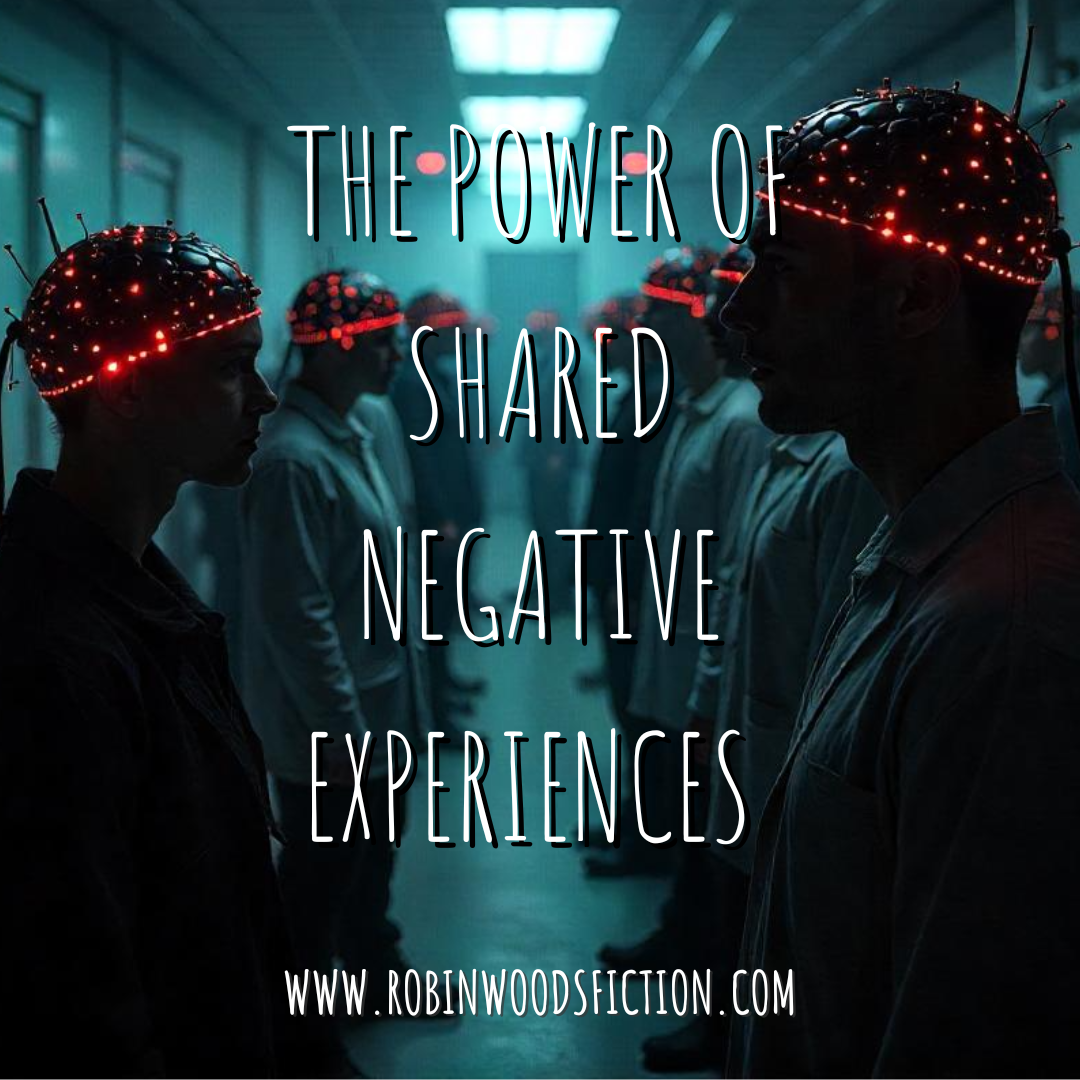
How Collective Grievances Can Sour Memories and Harm Communities
Negative experiences, whether personal or communal, have a profound impact on our emotional well-being. The process of sharing these experiences can be therapeutic, but when it evolves into a collective movement driven by negativity, it can lead to unintended consequences.
Specifically, when one individual’s negative experience becomes a rallying cry for others to share their grievances, it can sour memories and distort previously positive perceptions. This phenomenon, driven by group dynamics and mob mentality, can harm not only individuals but entire communities.
How Writers Can Use this Real Dynamic
Writers can use the concept of shared negative experiences to deepen character conflict and emotional complexity. By exploring how group mentality and collective grievances can distort memories and perceptions, writers can create compelling interpersonal and internal struggles.
This theme allows for rich storytelling about community division, healing, and resolution, while also offering opportunities to explore how characters are influenced by the emotional contagion of the groups they belong to.
The Ripple Effect of Negative Narratives
Imagine you had a seemingly positive experience—a vacation, a job, or a social gathering. In hindsight, the memories are pleasant, filled with moments of joy or achievement. However, when someone shares a strongly negative perspective about the same experience, their emotions can act as a trigger.
Slowly, the lens through which you once viewed that event changes. Even if your original memory was positive, the negative narrative begins to seep into your thoughts, causing you to reconsider. “What if it wasn’t that great? What if there were things I missed?” This shift can lead to the unsettling realization that a cherished experience has been tainted by someone else’s emotions.
This alteration in perception isn’t just about personal memories. It’s a reflection of how emotions and shared narratives can influence collective memory, especially within a community.
When people start sharing their grievances, whether in the workplace, on social media, or among a group of friends, their collective frustration becomes the dominant narrative. This phenomenon isn’t just about agreeing with one person’s story; it’s about an emotional contagion that spreads rapidly, distorting how others see their own experiences.
Mob Mentality: The Group’s Influence
The concept of “mob mentality”—where individuals conform to the actions or opinions of a group—plays a critical role in the process of rallying others around a shared negative experience.
Mob mentality can make people feel a sense of belonging or solidarity, but it also suppresses individual critical thinking and exacerbates negative emotions. As people feed off each other’s anger, frustration, or resentment, these feelings amplify and intensify.
In a mob-like atmosphere, individuals are more likely to:
- Dismiss nuances: Complexity is lost when the group’s collective feelings take precedence. A positive experience is oversimplified as “bad” because the group cannot reconcile personal variations.
- Experience heightened emotional arousal: The intense emotions shared within the group override rational thinking. Participants may begin to exaggerate their own experiences to align with the group’s heightened sentiment.
- Reject alternative viewpoints: Dissenting opinions or individuals who disagree with the prevailing narrative are often ostracized or invalidated. The group dynamic makes it difficult for individuals to critically assess their own experiences and question the dominant narrative.

Get my Writer’s Tool Kit for FREE when you sign up for my newsletter. It’s a zero spam zone, so don’t worry, I won’t flood your inbox. You get:
- Free printables
- Synonym lists
- Writing bingo
- Free book & more
The Neuroscience of Collective Grievance Sharing
The impact of shared negative experiences can be explained in part by neuroscience, which shows how our brains are wired to respond to social influence and emotional contagion. Here are some key factors:
- Mirror Neurons: These are brain cells that fire when we observe others experiencing emotions. Mirror neurons help us empathize with others, but they also make us susceptible to adopting their emotions. When someone shares a negative experience with intensity, our mirror neurons can cause us to feel the same negative emotions, even if we did not personally have the same experience.
- Oxytocin and Group Cohesion: Oxytocin, often called the “bonding hormone,” plays a role in creating feelings of connection and trust within a group. While this hormone promotes social bonding, it can also reinforce in-group loyalty and escalate collective grievances. When people share negative experiences, oxytocin can create a false sense of unity that exacerbates groupthink and reduces the capacity for critical analysis.
- The Limbic System: The limbic system is involved in processing emotions and memories. When we are exposed to others’ strong negative emotions, our limbic system reacts in ways that enhance emotional salience. This can cloud judgment and elevate the intensity of emotions, causing negative memories to overshadow positive ones.
- Cognitive Biases: Our brains tend to prioritize negative information (the “negativity bias”). When negativity is shared within a group, this bias can cause individuals to overemphasize the negative aspects of their own experiences, even when those aspects were originally neutral or positive.
Confirmation Bias
Confirmation bias is the tendency to search for, interpret, or remember information in a way that confirms one’s preexisting beliefs or opinions, while giving less consideration to evidence that contradicts them. This bias can lead people to reinforce their existing views, even when presented with conflicting information, and can create echo chambers where only similar opinions are shared and valued.
This plays a significant role in how negative experiences can spread and intensify within a community. When individuals share grievances, others who may have had similar experiences often align with those negative views, reinforcing the sentiment. This creates a feedback loop where the group becomes increasingly convinced that their shared perception is accurate, even if individual experiences were more nuanced or initially positive.
As people begin to recall their own memories in light of the group’s narrative, they may find themselves interpreting past events more negatively, influenced by the confirmation of others’ complaints. This can distort their original, positive recollections, leading to collective negativity.
The impact of confirmation bias extends beyond personal memory, fostering an environment of group polarization, where the group’s beliefs become more extreme.

Do you have a story in your head?
Prompt Me Novel can help.
- Brainstorming and Outlining
- Plotting and the “Tent Pole” Method
- Character Worksheets
- Conflict and Setting
- Space for Easy Journaling
- Reference and More!
The Harm to Communities
When negativity takes center stage, the harm to communities can be far-reaching:
- Erosion of Trust: As negative experiences dominate the conversation, trust within a community erodes. People may become more suspicious of one another, assuming the worst rather than giving each other the benefit of the doubt.
- Division and Polarization: Rather than fostering an environment of open dialogue, shared negativity can create divisions. People who do not share the same grievances may feel alienated, and the community can split into factions.
- Chronic Resentment: Communities that focus on collective grievances may find it hard to move forward. The constant reaffirmation of negativity can create an environment of chronic resentment, where progress is stifled, and emotional growth becomes stunted.
Positive Ways to Vent or Whistle-Blow
Not all sharing of negative experiences is harmful. In fact, venting or whistle-blowing can be important for personal healing or social justice. However, the key is how we approach these actions in a healthy, constructive way:
- Mindful Venting: Venting to a trusted friend or therapist in a way that fosters healing is vastly different from spreading negativity indiscriminately. Mindful venting involves being aware of one’s emotions, expressing them constructively, and not using others as emotional sounding boards to perpetuate negativity.
- Seeking Resolution: When individuals share grievances, the goal should be to find solutions. Whether through constructive feedback, discussions, or seeking out help from a mediator, the intention should be to improve the situation, not simply amplify the hurt.
- Whistle-blowing with Integrity: Whistle-blowing, when done ethically, can bring attention to harmful practices and bring about change. The key is ensuring that the intention is to address the issue and not to fuel a personal vendetta or to stir up anger. When blowing the whistle, the goal should be to uphold values of justice, transparency, and the betterment of the community, rather than to stir division.
- Fostering Empathy: Empathy can be a powerful antidote to collective negativity. Encouraging open conversations where individuals can share their perspectives and experiences—without judgment or the pressure to conform to a single narrative—can help promote understanding and healing.
Last Thoughts
The power of shared negative experiences is undeniable, but it’s important to be mindful of how it can distort memories, amplify grievances, and harm communities.
While venting and sharing negative experiences can be therapeutic in the right context, collective grievances that evolve into mob mentality can have far-reaching consequences. By fostering empathy, encouraging positive outlets for expression, and focusing on resolution rather than rumination, we can protect the integrity of our memories and strengthen the bonds within our communities.
Of course, many of your characters should have these bad habits. 😉
So as for you writers, go ahead and tear up your fictional community. Now you can do it backed by neuroscience. Go forth and write.
References below
Recent Posts

Stand Like a Superhero (and Tell Your Inner Critic to Sit Down)
Discover how small, positive changes—and a daily superhero pose—can boost confidence, heal emotional wounds, and shift your mindset. Embrace your messy humanity with humor, grace, and powerful “I Am” affirmations.


The Lying and Gaslighting Connection
Is all lying gaslighting? Learn how authors can incorporate gaslighting behaviors into your writing to create complex, manipulative characters in fiction. Discover how this psychological tactic enhances conflict, tension, and character depth in your writing. And…learn ways to be aware of this in your personal life.

24 Mind Traps Writers Should Know
The same mind traps that mess with our creative flow in real life also make for some fantastic character development opportunities. Here’s 24 mind traps writers should know and how to use them.
References
Websites
- Cognitive Bias: How We Are Wired to Misjudge Simply Psychology
- How Cognitive Biases Influence the Way You Think and Act Very Well Mind
- The Psychology of Mob Mentality Psychology Today
- Bullying, Social Psychology, and Mob Mentality
Books
- Gazzaniga, M. S., Ivry, R., & Mangun, G. R. (2018). Cognitive Neuroscience: The Biology of the Mind (5th ed.). W.W. Norton & Company.
- Cacioppo, J. T., & Patrick, W. (2008). Loneliness: Human Nature and the Need for Social Connection. W.W. Norton & Company.
- Brown, R., & McDonald, P. (2018). Social Identity and Intergroup Relations. Psychology Press.
- Hatfield, E., Cacioppo, J. T., & Rapson, R. L. (1994). Emotional Contagion. Cambridge University Press.
- Keltner, D., & Haidt, J. (2003). Approaching the Science of Human Emotions: A New Universalist Understanding of Emotions and Social Life. In Handbook of Emotions (2nd ed.). The Guilford Press.
Ignite Your Creative Writing with the Prompt Me Series

